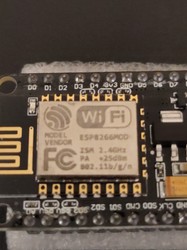

Reverse engineering, a.k.a. looking at something. Now illegal, brought to you by capitalism
Without reverse engineering, there is no security. No way to find new bugs and vulnerabilities or confirm it’s backdoor free. Just blind trust only.
It offers protection from crackers and cybergangs too, because they always follow laws. /s
Reverse engineering prohibitions are the dumbest things.
Let’s say I do this. Arduino sues me. Okay. Now what? What money are they going to take?
Hell, this would be a perfect time for everyone to form an LLC and purchase Arduinos as the LLC and then release your research under your corporate name as CC0. If your LLC has no revenue, you as an individual are legally protected.
Arduino can try to put the genie back in the bottle but good luck.
Better companies than Arduino have tried to prevent hardware reverse engineering and have failed. Apple being the biggest company I can think of that have tried to sue people for releasing schematics of their motherboards.
They can’t take your money but they can bury you into the ground and use you as an example so that no one ever tries to do the same thing. Ever heard of Aaron Schwartz?
It’s still legal in Australia, at least, we never got the anti-circumvention rule the US media companies got into the US trade agreements
Or rather we did, but they have exceptions that cover just about every otherwise legal use case. I can legally decrypt media to play on my Linux machine, for example. I think the only thing we can’t legally do is circumvent controls to do copyright violation
Maybe it’s just what I’ve been noticing, but I feel like Arduino was already losing its share of the hobbyist market. The plethora of small, cheap esp32 devices have already been taking Arduino’s place.
Also rp2040 devices.
Odd that the newer RP2350 has a lower clock speed, while being improved in most other respects. Is that why the RP2040 is still seemingly the community preference?
Feature RP2040 RP2350 Package QFN-56EP QFN-60EP or QFN-80EP CPU Cores 2 × ARM Cortex-M0+ 2 × ARM Cortex-M33 (w/FPU), 2 × Hazard3 RISC-V CPU Clock 200 MHz[5] 150 MHz SRAM 264 KB, 6 banks 520 KB, 10 banks Flash None None (RP2350), 2 MB (RP2354) OTP None 8 KB DMA 12 chan, 2 IRQ 16 chan, 4 IRQ PIO 2 (8 state machines) 3 (12 state machines) PWM 16 24 ADC 4-chan 12-bit ADC 4-chan 12-bit (QFN-60EP), 8-chan 12-bit (QFN-80EP) DAC None None HSTX None One Engines ? RNG, SHA-256 Personally, I never really counted the RP2350 as a successor. It’s a different animal completely. A 2040 successor would be something like 4x cortex-m0’s or a faster clock with more ram or whatever, the 2350 has completed different capabilities and components and can live along side the 2040.
I feel like the preferred one is the 2040 simply because it’s cheaper, and capable enough for the vast majority of use cases at this point.
Edit: yes I know RPI called their board using the 2350 the pico 2, but the 2040 chip itself is used in more places than just the pico and not every one used the 2350 as a v2.
Cheap. Also, a large part of the tinkering community never moves past soldering or perf board + lack of cheap 2354 boards. 2040 is already good enough for keebs and most projects. 2350 had eratta E9 published (gpio lockup) which killed its initial adoption rate for more advanced projects PicoLogicAnalyzer, protocol emulation, etc.
Same with raspberrypi really.
companies just can’t seem to know how to grow without line go up mentality.That’s just it, you don’t need to grow. Just sell a useful product at a reasonable price.
In capitalism, the consumer isn’t the target audience. A business exists to make money. The more money you make, the more shareholders you gain, the more the shareholders demand BLOOD!
No one forces you to sell shares.
… untill someone does.
???
You don’t need to take your company public, you know?
You can just stay its sole owner, then no one can force you to do anything with it (except for a judge).Which countries?
They seem to forget that “line go up” isn’t the primary objective. If you make a good product and give half a shit about your customers, the line goes up as a natural consequence.
Yes, but line go up fast enough?
Line go brrrr?
There are clones now more open than arduino that we can buy. In addition esp32 and other small boards are awesome.
Arduino is dogshit, I will not elaborate.
Arduino has its place for self-taught hobbyists. For a lot of projects, a simple code is more than enough, so there is no point of going into the more advanced mcu like esp32 or stm32.
Not since the pi pico came out.
It’s cheaper, more capable, and you can still use arduino code if you want.I can find an arduino nano clone for 3$. There are use case for ultra cheap electronics like that.
Sure, but you can do better for $3. Smaller, more powerful, similar power consumption
I am not in the US. Seeed shipping would kill me
I can find the official Pi Pico for $3.50, I’m sure clones are cheaper than that.
The official Pico, I can only find them at 9$. I am not in the US.
Arduino has been irrelevant for a while. There are better alternatives for everything they offer. For a start, take a look at Raspberry Pi’s microcontrollers.
Up next: Raspberry foundation enshitification.
The closest they’ve come so far is prioritizing industrial customers and compute modules for a while during a chip shortage, to my memory. Hopefully they stick to their roots in the hobbyist/educational sector.
To be fair, if most of your funding (source needed) comes from industrial customers, not supplying them is a good way to lose their patronage.
So even if it sucked for hobbyists at that moment, keeping a big player like RbP viable for the long term might not be too bad of a tradeoff.
If you buy one of the knock-offs, will the terms still apply? Cause I think I’m seeing an out here.