

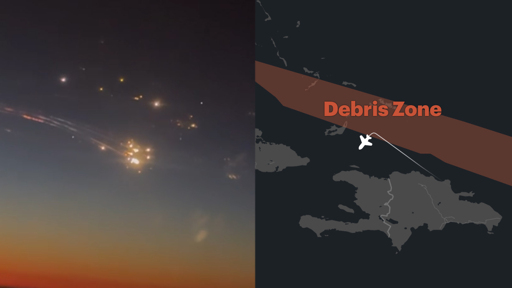
When SpaceX CEO Elon Musk chose a remote Texas outpost on the Gulf Coast to develop his company’s ambitious Starship, he put the 400-foot rocket on a collision course with the commercial airline industry.
Each time SpaceX did a test run of Starship and its booster, dubbed Super Heavy, the megarocket’s flight path would take it soaring over busy Caribbean airspace before it reached the relative safety of the open Atlantic Ocean. The company planned as many as five such launches a year as it perfected the craft, a version of which is supposed to one day land on the moon.
The FAA, which also oversees commercial space launches, predicted the impact to the national airspace would be “minor or minimal,” akin to a weather event, the agency’s 2022 approval shows. No airport would need to close and no airplane would be denied access for “an extended period of time.”
But the reality has been far different. Last year, three of Starship’s five launches exploded at unexpected points on their flight paths, twice raining flaming debris over congested commercial airways and disrupting flights. And while no aircraft collided with rocket parts, pilots were forced to scramble for safety.
How long until he makes a plane crash?
Make sure it’s one of these and I don’t see the problem.