The number of ads I had popping up while trying to read that article isn’t discouraging me from using adblockers.
This is actually one of my favorite websites to browse on desktop through my VPN and extreme DNS blocking solution. The console just fills with blocked content and JavaScript errors, it really warms my heart.
For those curious what “adblockers said really happened”:
[AdGuard] suggested that the issue may have been linked to popular community-maintained filter lists like EasyList and uBlock’s Quick Fixes.
A new filter rule added to EasyList on August 11, 2025 targeted telemetry requests thought to be tied to YouTube’s view attribution and analytics.
That rule remained in place until September 10, when it was temporarily disabled.
A similar change was added to uBlock’s Quick Fixes on September 10 and removed on September 17.
OK. I mean Fuck Alphabet anyhow, but this means a youtuber who relies on view counts for monetary income (I guess) would actually have reason to worry about adblockers?
Again, I’m not saying I’m against adblockers or even this particular feature. And I very well see what Google is doing here, trying to get their creators up in arms against adblocking. I just want to know if this is debunkable or if youtubers would have a genuine argument here.
I did not really understand above explanation. I guess I need it ELI5.
It wouldn’t matter whether it was intentional or not. Put simply, Google can continue indirectly punishing creators for tolerating adblockers then redirect blame, even though they could have easily separated the metrics from the advertising and telemetry endpoints that blockers filtered. This way they get their money either from unblocked ads or from creator’s reduced view counts, win-win for Google.
As an added bonus for Google, by ensuring view metrics get fucked up, it double punishes creators featuring sponsored content that rely on those metrics to determine how much the sponsor should pay them. Meanwhile Google could, in theory, sell ad placements attached to their own internal metrics that differ from the affected ones publicly visible.
So you’re saying Google packaged the viewcount that’s relevant to monetization into a 3rd party js data request instead of just counting the actual video’s views, and so manages to play content creators against privacy-conscious users?
Worthy of a Roman Emperor, that.
If you see an ad, close the tab.
Literally the only way they will learn. I really don’t understand how we as a society have accepted ads as a necessary evil. We all hate them, but we all also make them work. It’s horrible.
It’s going to take a big cultural shift to get enough people to pay content creators through subscriptions to compete with ad-driven models.
Eventually YouTube’s hubris will cross the line where enough people will just assume the ads are so bad it’s not worth trying to watch a video. As somebody with technical means and no tolerance for ads I’m astonished more people aren’t there yet.
How much do we need to pay though? Most content creators I see have their patreon around $7 CDN/mo. Add even a couple and you’re now at the cost of a streaming subscription with much more content. I would have no problem paying content creators if the fees were more reasonable, but right now I only subscribe to a couple.
Should a creator’s patreon drop in price to $1 or $2 a month, or should the viewer pay a small fee per view? What new monetization system would make sense where the consumer doesn’t have an unaffordable pile of subscriptions, but the creators still get paid a fair rate for their effort?
I’ve been wondering for a while where the point of diminishing returns is. Surely, at some point, ads become aggressive enough to have an adverse effect on advertisers?
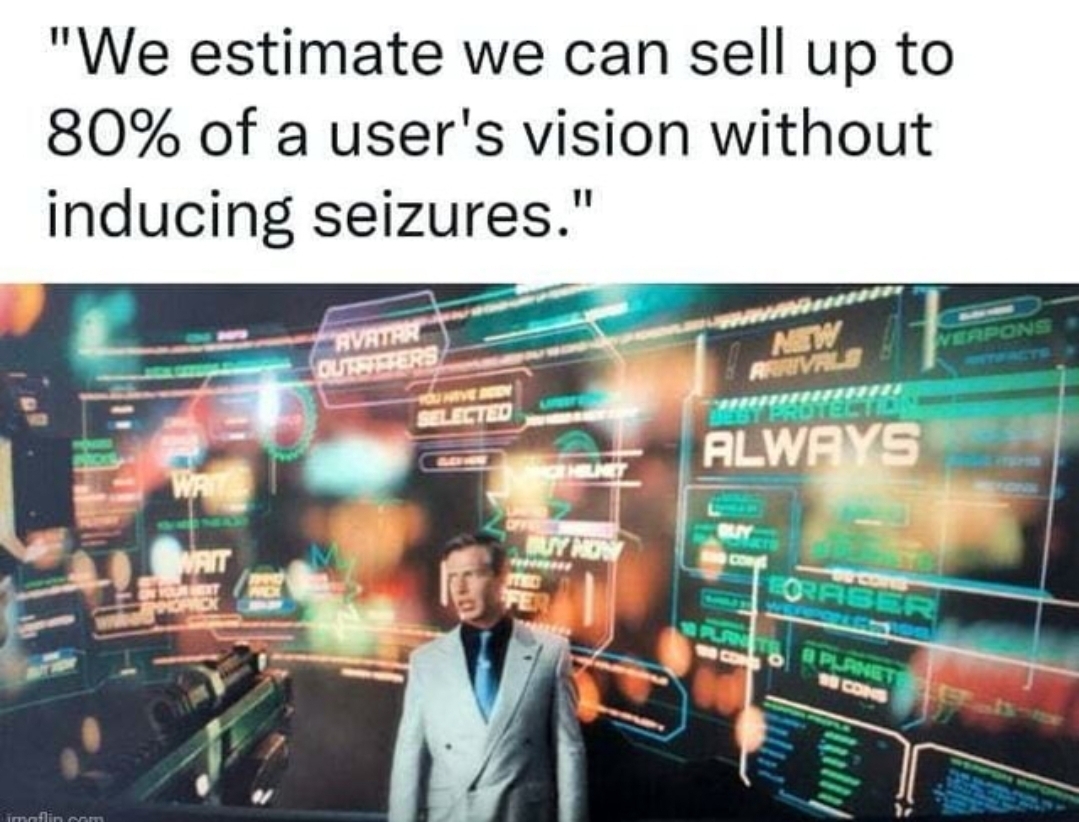
I often wonder how ads of any kind have ever worked, unless it was an ad for something we had already planned on buying.
Ads are super effective. If you have something to buy, but you don’t know much about it, you will tend towards buying the thing that was advertised to you more often than not just because you are more familiar with it over other things. You might not stick with it, but being the first thing someone tries is huge.
Repetition brings familiarity and familiarity leads to trust for the vast majority of humans. It is the reason that campaign signs works, why brand names are so valuable, and why popularity tends to increase exponentially when it works.
Most ads are just intended to get you to remember the thing they are selling.
Before their media blitz campaign, Hormel’s Spam was eaten in perhaps 20% of households; after the campaign it was closer to 70%.
Ads do work, if you do them right. People go for what they’ve heard of over what they haven’t.