

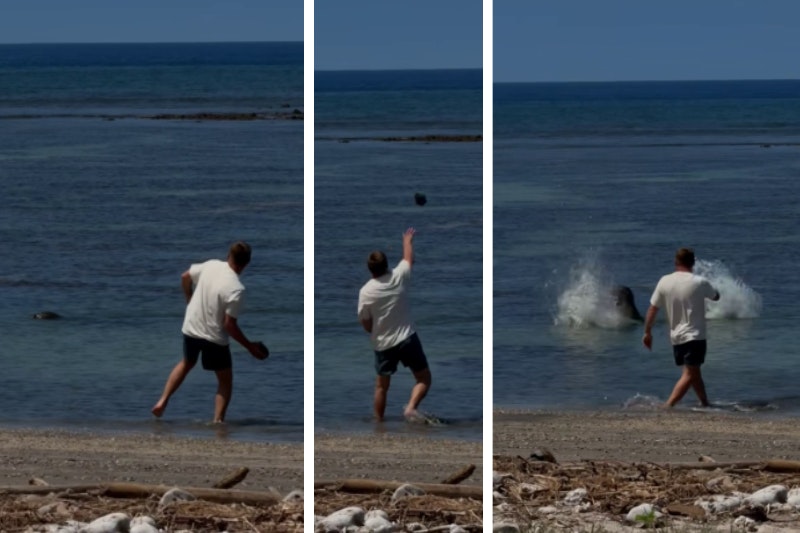
A 38-year-old Washington man has been arrested for allegedly throwing a rock at a monk seal on the shores of Maui in early May, an incident that was caught on video and quickly went viral.
The monk seal is well-known to locals who have named her “Lani.”
Special agents with the National Oceanic and Atmospheric Administration arrested Igor Mykhaylovych Lytvynchuk near Seattle on Wednesday, May 13. Lytvynchuk, 38, is a resident of Covington, Wash., roughly 30 miles southeast from Seattle.
On May 5, bystanders took video of a man walking along the beach in the Lahaina area of Maui as he followed a monk seal, Lani, in the nearby shallow water. The seal was swimming and pushing a log. The man then took a large rock — one witness described it as the size of a coconut — and threw it at the seal, nearly hitting its head. The seal was startled and reared out of the water. Lani was motionless for a time, avoiding the shore, after the scare.
Legal jargon. You have to say “alleged” until he’s proven guilty in a court of law, no matter how compelling the evidence is
You don’t have to, it just reduces exposure to lawsuits.
So in the land of lawsuits, you have to. Don’t push your fucking glasses up and um acktually for internet points.
You should welcome the opportunity for clarity, you left out important facts and came to an erroneous punch line.
The only requirement to adjust your language going forward would occur if you are found guilty of the libel/slander charge. It’s not guaranteed you will, especially when there’s substantial evidence. So no it’s not de facto legally required by print and media organizations. They do so to minimize legal entanglement either way. Additionally your overall perspective isn’t even globally applicable as libel and slander laws vary greatly depending on country.
Thank you.